INDEPENDENT AREA & BUYER GUIDE
Sóller is one of Mallorca’s most recognisable mountain towns, set in a fertile valley between the Serra de Tramuntana and the sea. Its appeal is not based on a single attraction: it combines an active historic centre, Modernist architecture, a weekly rhythm of shops and cafés, citrus groves, walking routes and a direct tram connection to Port de Sóller.
For buyers, the crucial distinction is between living in the compact town, on its residential edges or in the surrounding valley. A townhouse near Plaça de sa Constitució can put daily life within walking distance but may bring access, parking and renovation constraints. A country home outside the centre can offer land and privacy while making a car, maintenance and careful legal due diligence more important.
This guide focuses on how Sóller works as a place to live and own a home. Current availability is fragmented across agencies and portals, so the aim is to help buyers define the right micro-location and property character before reviewing individual listings.
Quick decision guide
- In one sentence: A substantial Tramuntana town with a real year-round centre, mountain landscape and access to Port de Sóller.
- Best suited to: Buyers wanting local town life, nature and a functioning community.
- Less suited to: Those needing fast daily access to Palma or flat, simple driving.
- Character: Mountain town and valley
- Year-round or seasonal: Year-round centre with a noticeable rise in visitors during spring and summer.
- Palma: approximately 35–50 minutes via the tunnel in normal conditions.
- Airport: approximately 40–55 minutes; verify the live route.
- Car need: Useful for most households, especially outside the centre and for school or beach trips.
- Nearest swimming: Port de Sóller beaches, about 10–20 minutes depending on traffic.
- Schools: Local schools serve the valley; most international-school options require travel toward Palma.
- Main advantage: Genuine town services, landscape, market and access to coast and mountains.
- Main compromise: Tunnel dependence, parking, humidity and tourist pressure in peak periods.
The different parts of Sóller
- Historic centre: walkable shops, market and traditional townhouses
- Orchard belt: greener homes and fincas with more maintenance
- Biniaraix side: village and mountain access
- Road to the port: convenient for the coast but more traffic exposure
02
Is this area right for you?
Sóller tends to suit buyers who want a genuine year-round town, mountain scenery and access to both culture and nature. It can work for relocating households, creative professionals, hikers and second-home owners who prefer local life to a purpose-built coastal resort.
Choose the centre if walkability, cafés and community life matter most. Look to the valley edges for gardens, orchards and quieter surroundings, accepting more dependence on a car. Buyers who want the sea outside the front door should compare Port de Sóller; those seeking a smaller, quieter and more exclusive mountain village can compare Deià.
03
Property types and character
Townhouses in central Sóller
Traditional townhouses range from compact homes to substantial residences with patios or gardens. Character features can be a major attraction, but access, protected elements, damp, roof condition and the legality of past alterations deserve close inspection.
Fincas and country homes in the valley
Outside the centre, buyers find stone houses, orchard properties and rural plots. Views and privacy vary street by street. Confirm boundaries, water, utilities, access rights, planning status and whether every building and pool is properly recorded.
Apartments and lock-up-and-leave options
Apartments are available but do not define Sóller in the way townhouses and rural homes do. For a low-maintenance purchase, compare lift access, parking, community costs, street noise and distance to daily services.
04
Lifestyle and atmosphere
Daily life and local character
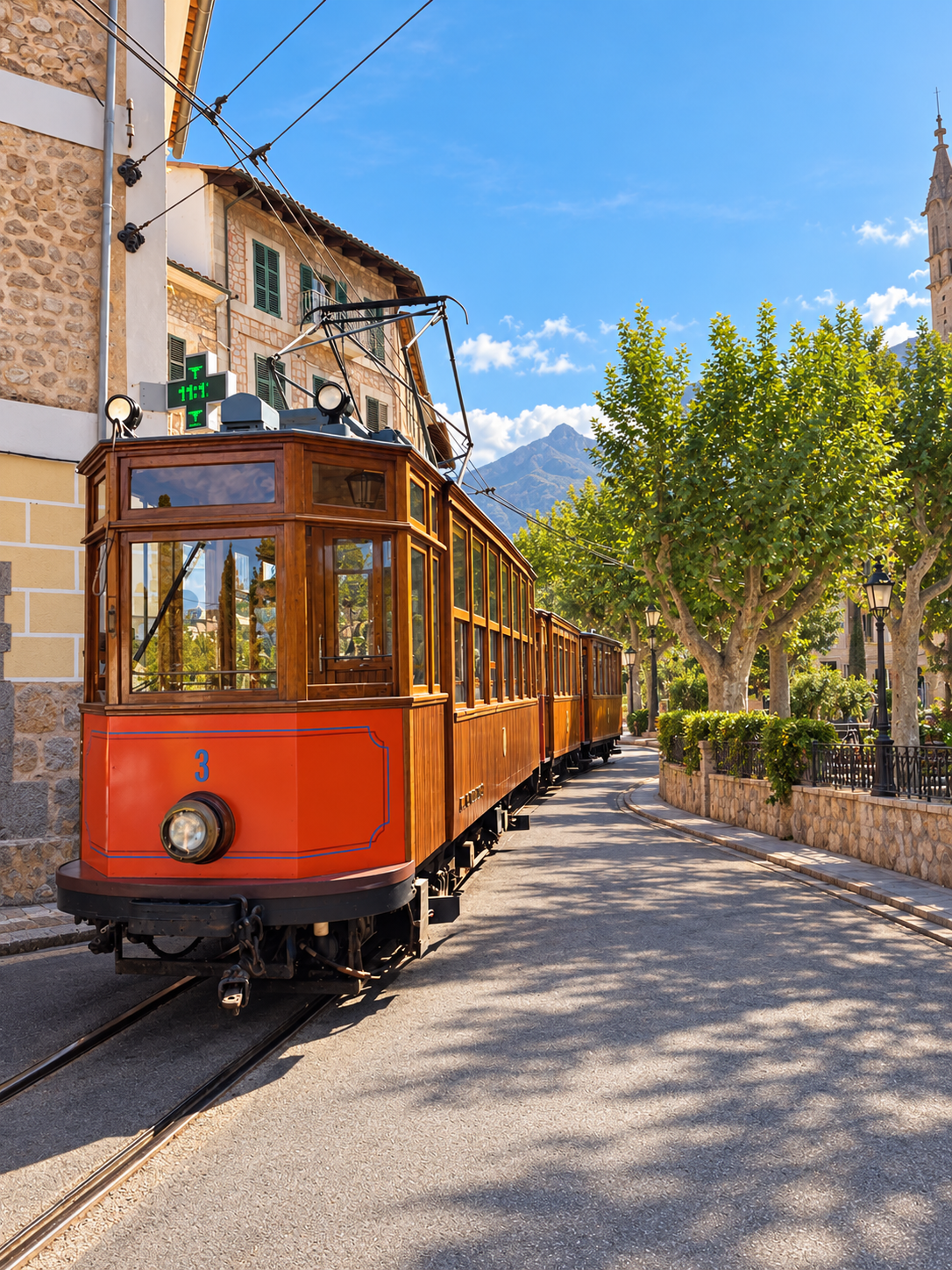
Plaça de sa Constitució is the social centre, with the church, cafés and historic tram shaping the townscape. Sóller also functions as a service centre for the wider valley, rather than becoming dormant outside the main visitor season.
Nature, coast and points of interest
- Historic tram and railway: the tram links Sóller with its port, while the railway connects the valley with Palma.
- Serra de Tramuntana: the surrounding cultural landscape is UNESCO-listed and supports extensive walking routes.
- Biniaraix and Fornalutx: nearby settlements broaden the valley lifestyle and access to mountain routes.
- Port de Sóller: the bay, beaches and waterfront are approximately three kilometres from the inland town.
Schools and family life
Sóller has local early-years, primary and secondary education options. The nearest school depends on the exact address, age group, catchment and admissions position; families should check the Balearic education directory and test the real school journey at normal traffic times. The town’s year-round services and public spaces can be family-friendly, but narrow streets, parking and rural access vary significantly.
A typical weekday in Sóller
A typical weekday can begin with errands around the market and square, followed by work or school in the valley and an evening walk among the orchards or at the port.
Family life and schools
Local schools serve the valley; most international-school options require travel toward Palma. Admissions, catchment, teaching language and transport arrangements should be confirmed directly with each school. Test the journey from the exact address during normal drop-off time.
Services and practical needs
Check the real walking route to groceries, pharmacy, healthcare, banks, deliveries, gyms, coworking and electric-vehicle charging. Availability can change by season and a short map distance may still involve traffic, hills or steps.
Beaches, nature and free time
The most relevant swimming options are Port de Sóller beaches, about 10–20 minutes depending on traffic. Parking, shade, accessibility and crowding should be assessed in both high season and winter. Walking, cycling, boating, golf or tennis opportunities depend on the micro-location rather than the area name alone.
Food, culture and social life
Year-round centre with a noticeable rise in visitors during spring and summer. Buyers considering permanent residence should check which cafés, restaurants and services remain open in January, not only what is available in summer.
05
Connections
Sóller has an unusual combination of road, heritage railway, tram and bus connections. The road tunnel made Palma more accessible, but commute times still depend on the exact property, traffic and season. The tram is valuable for reaching the port but should not be treated as a high-frequency commuter service without checking the current timetable.
Realistic journey planning
For planning, allow around 35–50 minutes via the tunnel to Palma and 40–55 minutes to Palma de Mallorca Airport in ordinary conditions. These are approximate driving ranges, not guarantees: school traffic, roadworks and summer demand can add time. Check current TIB or EMT services for the exact stop and season.
06
Points to consider before buying
- Central streets may have limited parking and difficult vehicle access.
- Older homes can require specialist surveys and sensitive renovation.
- Rural properties need careful checks of planning status, water, utilities and access.
- The valley’s mountain setting can affect winter sun, humidity and microclimate.
- Visitor activity is concentrated around the square, tram and market routes.
- Measure the actual walk to shops and schools; “Sóller” covers very different settings.
Advantages
- Genuine town services, landscape, market and access to coast and mountains.
- Year-round centre with a noticeable rise in visitors during spring and summer.
Practical compromises
- Tunnel dependence, parking, humidity and tourist pressure in peak periods.
- Test traffic, parking, noise, sun and the final walk at the exact address and at different times.
Who is Sóller suitable for?
- Families: Possible when the school route and year-round services work from the exact home.
- Year-round residents: Year-round centre with a noticeable rise in visitors during spring and summer.
- Remote workers: Usually possible; verify fibre and mobile coverage property by property.
- Living without a car: Less suitable for most households.
- Quiet and nature: Very suitable in carefully chosen streets.
07
Frequently asked questions
Is Sóller suitable for year-round living?
Yes. It is a functioning town with local services and community life, though the experience changes between the centre, valley edges and rural surroundings.
Is Sóller close to the beach?
Sóller town is inland. The beaches and waterfront are in Port de Sóller, connected by road and the historic tram.
What homes are typical in Sóller?
Traditional townhouses, stone country homes and fincas are central to the local market, with apartments also available.
Is Sóller walkable?
The historic centre is highly walkable. Homes on the valley edges or hillsides can be car-dependent, so assess the exact address.
How does Sóller compare with Port de Sóller?
Sóller offers a stronger inland-town identity and more traditional housing; Port de Sóller prioritises bay views, beaches and waterfront living.
How does Sóller compare with Deià?
Sóller is larger and more practical for daily services. Deià is smaller, steeper and generally more secluded.
SOURCES & REVIEW