INDEPENDENT AREA & BUYER GUIDE
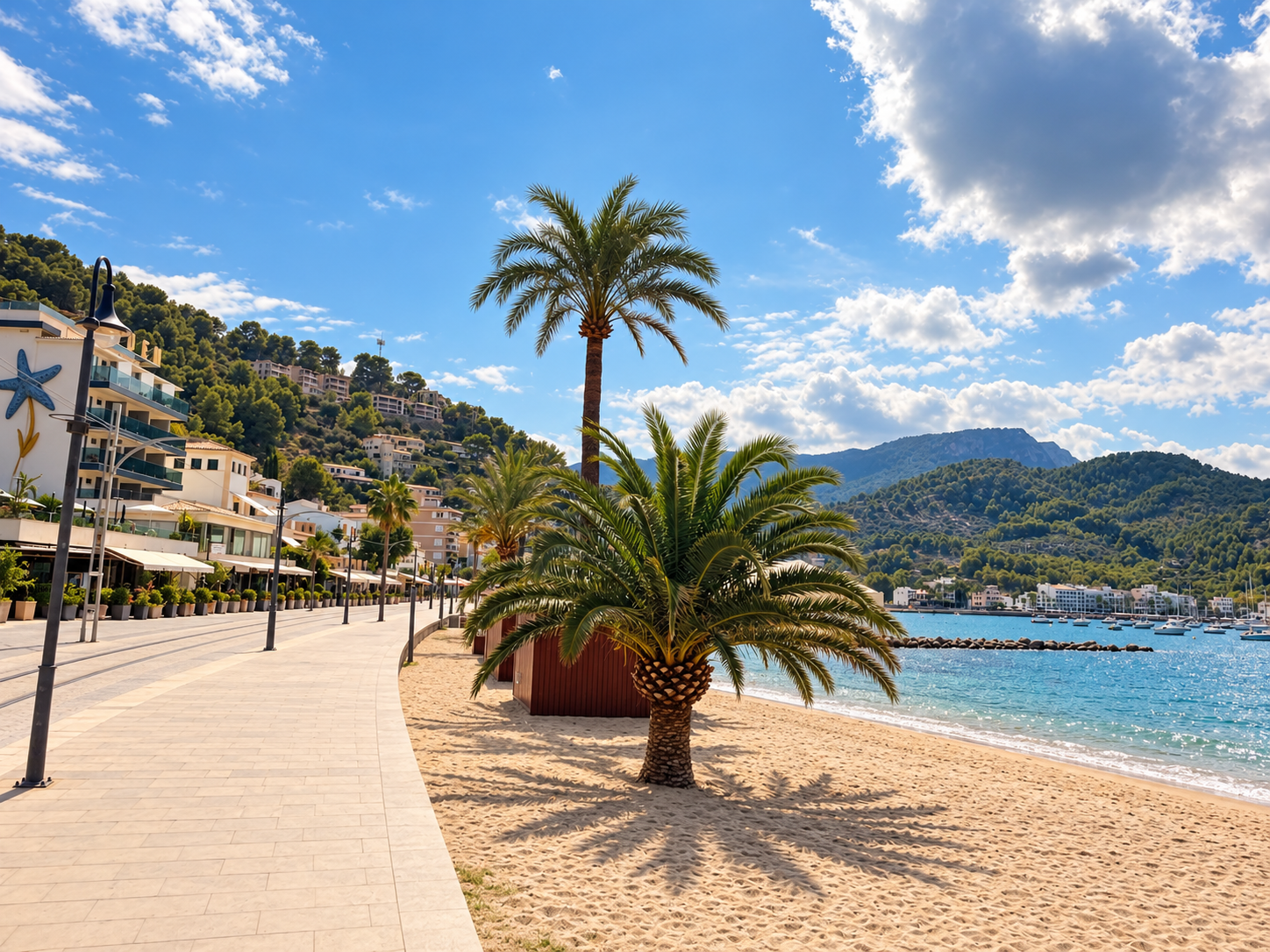
Port de Sóller sits around an almost circular natural harbour on Mallorca’s northwest coast, enclosed by the Serra de Tramuntana. Its waterfront, two main beach areas, fishing and leisure harbour, restaurants and historic tram create one of the island’s most distinctive coastal settings.
For buyers, the postcard view hides important micro-location differences. A promenade apartment can be highly walkable but exposed to activity and salt. Homes above the bay may gain privacy and expansive views while introducing steep roads, stairs and car dependence. The Santa Catalina side, central waterfront and Repic side each feel different.
Port de Sóller is closely connected to Sóller town but should not be treated as the same market. The port prioritises sea access and views; the inland town offers a stronger traditional centre, wider valley housing and a different year-round rhythm.
Quick decision guide
- In one sentence: A sheltered Tramuntana harbour combining beach life, restaurants and access to Sóller’s year-round services.
- Best suited to: Buyers wanting coast and mountain scenery in the same daily setting.
- Less suited to: Those seeking low tourism, effortless parking or frequent commuting to Palma.
- Character: Harbour town and mountain coast
- Year-round or seasonal: Resident life continues year-round, but waterfront activity is distinctly seasonal.
- Palma: approximately 35–50 minutes in normal conditions.
- Airport: approximately 40–55 minutes; verify the live route.
- Car need: Possible near the harbour; useful for schools, shopping and island travel.
- Nearest swimming: The two beaches around Port de Sóller bay.
- Schools: Most school provision and broader family services are in Sóller.
- Main advantage: Walkable harbour, beaches, tram connection and dramatic landscape.
- Main compromise: Peak-season traffic, parking, humidity and seasonal waterfront activity.
The different parts of Port de Sóller
- Harbour centre: restaurants, tram and maximum activity
- Repic beach: longer beachfront and family-oriented access
- Upper port: views and quieter streets with steep walking
- Road toward Sóller: practical connection but more traffic exposure
02
Is this area right for you?
Port de Sóller suits buyers who want the sea integrated into daily life, with cafés, restaurants, boating and walking close at hand. It can work for second-home owners, retirees and relocating households who accept seasonal intensity and limited flat land.
The waterfront suits walkability; elevated streets suit buyers who place outlook and privacy ahead of convenience. Compare Sóller for townhouses, valley life and broader services, or Deià for a smaller mountain village. Puerto Pollensa provides a flatter and larger northern bay alternative.
03
Property types and character
Promenade apartments
Front-line and near-water apartments offer convenience but require close review of community finances, façades, balconies, lifts, sound, restaurant activity and salt exposure. Orientation around the curved bay changes sun and views.
Hillside apartments and villas
Elevated homes can deliver broad harbour or open-sea outlooks. Check gradient, stairs, parking, retaining walls, drainage, legal floor area and whether daily errands are realistic without a car.
Traditional homes and renovation
Older properties can have strong character but may involve difficult access or complex works. Independent legal and technical due diligence is essential before budgeting a renovation.
04
Lifestyle and atmosphere
Waterfront and outdoor life
The bay supports swimming, sailing, paddling and waterfront walking. The Repic side and central beach have different atmospheres, while excursions and hiking routes connect the port with the wider Tramuntana landscape.
Useful points of interest
- Historic Sóller tram: links the port with Sóller town.
- Platja d’en Repic and the central beach: the main accessible swimming areas around the bay.
- Mirador de Santa Catalina: a viewpoint over the harbour and coast.
- Maritime Museum: located by the Santa Catalina viewpoint.
Schools and family life
Families generally use education options across the municipality of Sóller. The closest suitable centre depends on age, catchment, admissions and the exact side of the bay; test the school run from hillside homes in particular. Beaches and outdoor life are advantages, while gradients and seasonal waterfront traffic can complicate everyday movement.
A typical weekday in Port de Sóller
A weekday can combine a waterfront walk, local errands and remote work, with school, larger shops and administration handled in Sóller.
Family life and schools
Most school provision and broader family services are in Sóller. Admissions, catchment, teaching language and transport arrangements should be confirmed directly with each school. Test the journey from the exact address during normal drop-off time.
Services and practical needs
Check the real walking route to groceries, pharmacy, healthcare, banks, deliveries, gyms, coworking and electric-vehicle charging. Availability can change by season and a short map distance may still involve traffic, hills or steps.
Beaches, nature and free time
The most relevant swimming options are The two beaches around Port de Sóller bay. Parking, shade, accessibility and crowding should be assessed in both high season and winter. Walking, cycling, boating, golf or tennis opportunities depend on the micro-location rather than the area name alone.
Food, culture and social life
Resident life continues year-round, but waterfront activity is distinctly seasonal. Buyers considering permanent residence should check which cafés, restaurants and services remain open in January, not only what is available in summer.
05
Connections
The port connects to Sóller by road and historic tram, and onward to Palma by road, rail from Sóller and TIB services. Timetables and journey patterns vary by season. Buyers planning frequent Palma travel should test the full door-to-door route, including parking or transfers.
Realistic journey planning
For planning, allow around 35–50 minutes to Palma and 40–55 minutes to Palma de Mallorca Airport in ordinary conditions. These are approximate driving ranges, not guarantees: school traffic, roadworks and summer demand can add time. Check current TIB or EMT services for the exact stop and season.
06
Points to consider before buying
- Steep access can make a dramatic view inconvenient in daily life.
- Salt, wind and humidity increase exterior maintenance near the water.
- Summer activity, parking and visitor traffic are concentrated around the bay.
- Orientation affects winter sun and comfort around the curved harbour.
- Boat and restaurant activity can create sound in waterfront positions.
- Confirm community works, legal areas and retaining structures before purchase.
Advantages
- Walkable harbour, beaches, tram connection and dramatic landscape.
- Resident life continues year-round, but waterfront activity is distinctly seasonal.
Practical compromises
- Peak-season traffic, parking, humidity and seasonal waterfront activity.
- Test traffic, parking, noise, sun and the final walk at the exact address and at different times.
Who is Port de Sóller suitable for?
- Families: Possible when the school route and year-round services work from the exact home.
- Year-round residents: Resident life continues year-round, but waterfront activity is distinctly seasonal.
- Remote workers: Usually possible; verify fibre and mobile coverage property by property.
- Living without a car: Possible in selected central addresses, with compromises.
- Quiet and nature: Very suitable in carefully chosen micro-locations.
07
Frequently asked questions
Are Sóller and Port de Sóller the same place?
No. Sóller is the inland town; Port de Sóller is the coastal settlement and harbour, linked by road and tram.
Is Port de Sóller suitable year-round?
Yes for many residents, though the waterfront is quieter in winter and individual services can be seasonal.
Is the area walkable?
The promenade and central bay are walkable. Elevated residential streets can be steep and car-dependent.
What homes are common?
Apartments are prominent around the bay, with hillside villas and traditional homes in the wider port area.
How does Port de Sóller compare with Sóller?
The port prioritises beach, harbour and sea views; Sóller prioritises town life, traditional houses and the wider valley.
How does it compare with Deià?
Port de Sóller offers more waterfront services and housing choice. Deià is smaller, quieter and more strongly defined by mountain-village character.
SOURCES & REVIEW