INDEPENDENT AREA & BUYER GUIDE
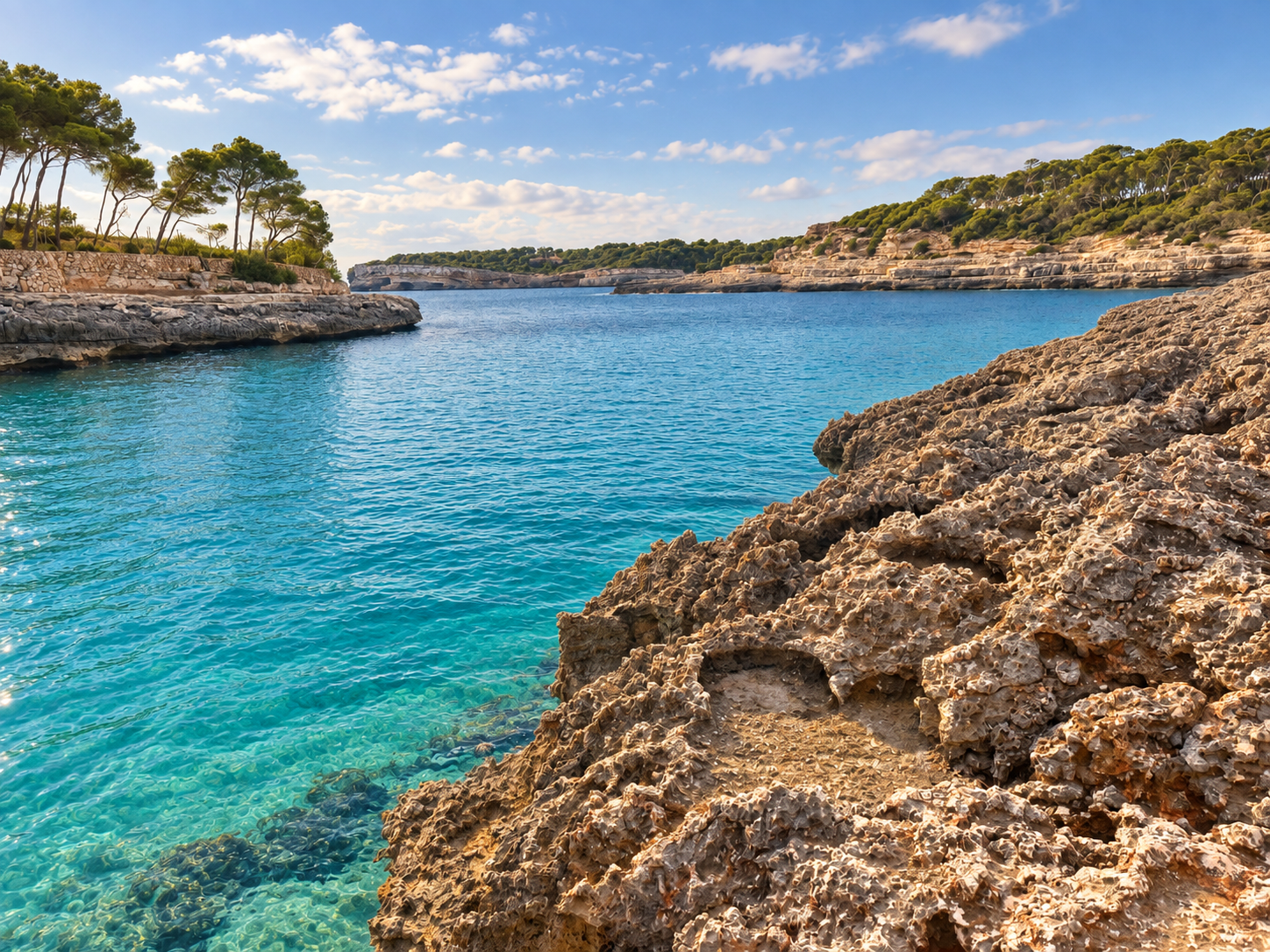
Cala d’Or is a planned coastal community in the municipality of Santanyí, known for low-rise white architecture, pine-framed coves and a marina. It is not one single bay or compact village: the wider area includes Cala Gran, Cala Petita, Cala Esmeralda, Cala Ferrera, Cala Egos and neighbourhoods around the marina.
That layout matters to buyers. A home described as “Cala d’Or” may be close to a beach, the pedestrian centre, the marina or a quieter residential edge, and each position creates a different daily routine. Walking distances, gradients, parking and seasonal activity should be checked at the exact address.
Cala d’Or has strong recognition among international buyers, but the best purchase starts with matching the micro-area to the intended use: summer base, year-round home, family property or lower-maintenance apartment.
Quick decision guide
- In one sentence: A planned southeast resort made up of several coves, low-rise white buildings and distinct neighbourhood centres.
- Best suited to: Second-home buyers and families prioritising beaches and compact resort services.
- Less suited to: Those seeking a traditional Mallorcan town or fully active winter social life.
- Character: Coastal resort and marina
- Year-round or seasonal: Strong summer season; permanent life exists but many hospitality businesses reduce hours or close in winter.
- Palma: approximately 55–70 minutes in normal conditions.
- Airport: approximately 50–65 minutes; verify the live route.
- Car need: Useful for schools, healthcare, larger shopping and reaching the wider municipality.
- Nearest swimming: Cala Gran, Cala Esmeralda, Cala Ferrera and smaller coves.
- Schools: Local schools serve the municipality; international-school commuting is generally lengthy.
- Main advantage: Multiple coves, family-friendly scale and marina leisure.
- Main compromise: Seasonality, summer parking and fragmented neighbourhood layout.
The different parts of Cala d’Or
- Central Cala d’Or: restaurants, shops and evening activity
- Cala Egos: separate residential and holiday pocket near the marina
- Cala Ferrera: beach-led area toward Felanitx
- Marina side: boating and dining with seasonal intensity
02
Is this area right for you?
Cala d’Or suits buyers who prioritise sheltered bathing coves, a polished resort environment and a broad summer choice of restaurants and leisure. Apartments and villas can work well as second homes, while year-round buyers should examine which services remain convenient outside peak season.
Choose the marina side for boating and restaurant access; the central coves for beach proximity; or residential edges for more calm. Buyers comparing east-coast beach life can also read Cala Millor. For a more traditional inland town connected to northern beaches, compare Pollença.
03
Property types and character
Apartments near coves and the centre
Low-rise apartments are a common lock-up-and-leave option. Check community fees, seasonal occupancy, rental rules, sound transfer, parking, pool maintenance and the real walking route to the nearest beach.
Villas and detached homes
Villas range from compact holiday-oriented houses to larger homes near the marina and residential edges. Outdoor space, pool legality, privacy, orientation and road noise can differ sharply even within the same neighbourhood.
Architecture and renovation
The whitewashed aesthetic gives Cala d’Or a coherent identity, but buyers should not assume equal build quality or legal status. Review licences, approved plans, extensions and technical condition with independent professionals.
04
Lifestyle and atmosphere
Coves, marina and daily rhythm
The area’s identity is shaped by multiple compact beaches rather than one continuous strand. Cala Gran, Cala d’Or, Cala Esmeralda, Cala Ferrera and Cala Egos create several distinct pockets of activity. The marina adds boating, restaurants and a more evening-focused atmosphere.
Useful points of interest
- Marina de Cala d’Or: the main yachting and waterfront dining hub.
- Es Fortí: a historic coastal fortification and viewpoint.
- Mondragó Natural Park: an important nearby landscape for coves and walking.
- Santanyí and Portopetro: nearby alternatives for market-town and smaller-harbour life.
Schools and families
Cala d’Or has local education provision, including CEIP Santa Maria del Mar, while older pupils or specific programmes may involve travel within the municipality. Catchment, transport and admissions should be confirmed directly. Calm coves and compact neighbourhoods can suit families, but summer crowds, traffic and the winter service pattern differ by micro-area.
A typical weekday in Cala d’Or
In summer, beaches, cafés and dinner are close at hand; in winter, routines depend more on supermarkets, municipal services and trips to Santanyí or larger towns.
Family life and schools
Local schools serve the municipality; international-school commuting is generally lengthy. Admissions, catchment, teaching language and transport arrangements should be confirmed directly with each school. Test the journey from the exact address during normal drop-off time.
Services and practical needs
Check the real walking route to groceries, pharmacy, healthcare, banks, deliveries, gyms, coworking and electric-vehicle charging. Availability can change by season and a short map distance may still involve traffic, hills or steps.
Beaches, nature and free time
The most relevant swimming options are Cala Gran, Cala Esmeralda, Cala Ferrera and smaller coves. Parking, shade, accessibility and crowding should be assessed in both high season and winter. Walking, cycling, boating, golf or tennis opportunities depend on the micro-location rather than the area name alone.
Food, culture and social life
Strong summer season; permanent life exists but many hospitality businesses reduce hours or close in winter. Buyers considering permanent residence should check which cafés, restaurants and services remain open in January, not only what is available in summer.
05
Connections
Cala d’Or is in Mallorca’s southeast and is farther from Palma than southwest resorts. Road travel is the practical default for many owners. Bus services should be checked against the current TIB timetable, especially outside summer. For frequent airport or Palma journeys, test the route at the times you expect to travel.
Realistic journey planning
For planning, allow around 55–70 minutes to Palma and 50–65 minutes to Palma de Mallorca Airport in ordinary conditions. These are approximate driving ranges, not guarantees: school traffic, roadworks and summer demand can add time. Check current TIB or EMT services for the exact stop and season.
06
Points to consider before buying
- The Cala d’Or label covers several distinct coves and neighbourhoods.
- Summer activity and winter quiet can be markedly different.
- Some services and restaurants operate seasonally.
- Beach proximity does not always mean an easy or level walk.
- Confirm community and holiday-rental rules before relying on rental income.
- For villas, verify pools, terraces and extensions against approved documentation.
Advantages
- Multiple coves, family-friendly scale and marina leisure.
- Strong summer season; permanent life exists but many hospitality businesses reduce hours or close in winter.
Practical compromises
- Seasonality, summer parking and fragmented neighbourhood layout.
- Test traffic, parking, noise, sun and the final walk at the exact address and at different times.
Who is Cala d’Or suitable for?
- Families: Possible when the school route and year-round services work from the exact home.
- Year-round residents: Strong summer season; permanent life exists but many hospitality businesses reduce hours or close in winter.
- Remote workers: Usually possible; verify fibre and mobile coverage property by property.
- Living without a car: Less suitable for most households.
- Quiet and nature: Highly dependent on micro-location and season.
07
Frequently asked questions
Is Cala d’Or suitable for year-round living?
It can be, particularly in established residential pockets, but buyers should verify winter services and transport around the exact home.
Which part of Cala d’Or is best?
There is no universal answer. The centre, marina, Cala Egos and the northern coves prioritise different combinations of walkability, boating, beaches and calm.
Is Cala d’Or family-friendly?
Its sheltered coves and amenities can work well for families. Summer congestion, beach crowds and school logistics need address-level checks.
What property types are common?
Apartments, low-rise developments and detached villas are common. Condition, community rules and micro-location matter more than the broad area label.
How does Cala d’Or compare with Cala Millor?
Cala d’Or is organised around smaller coves and a marina; Cala Millor has a long open beach and continuous promenade.
SOURCES & REVIEW