INDEPENDENT AREA & BUYER GUIDE
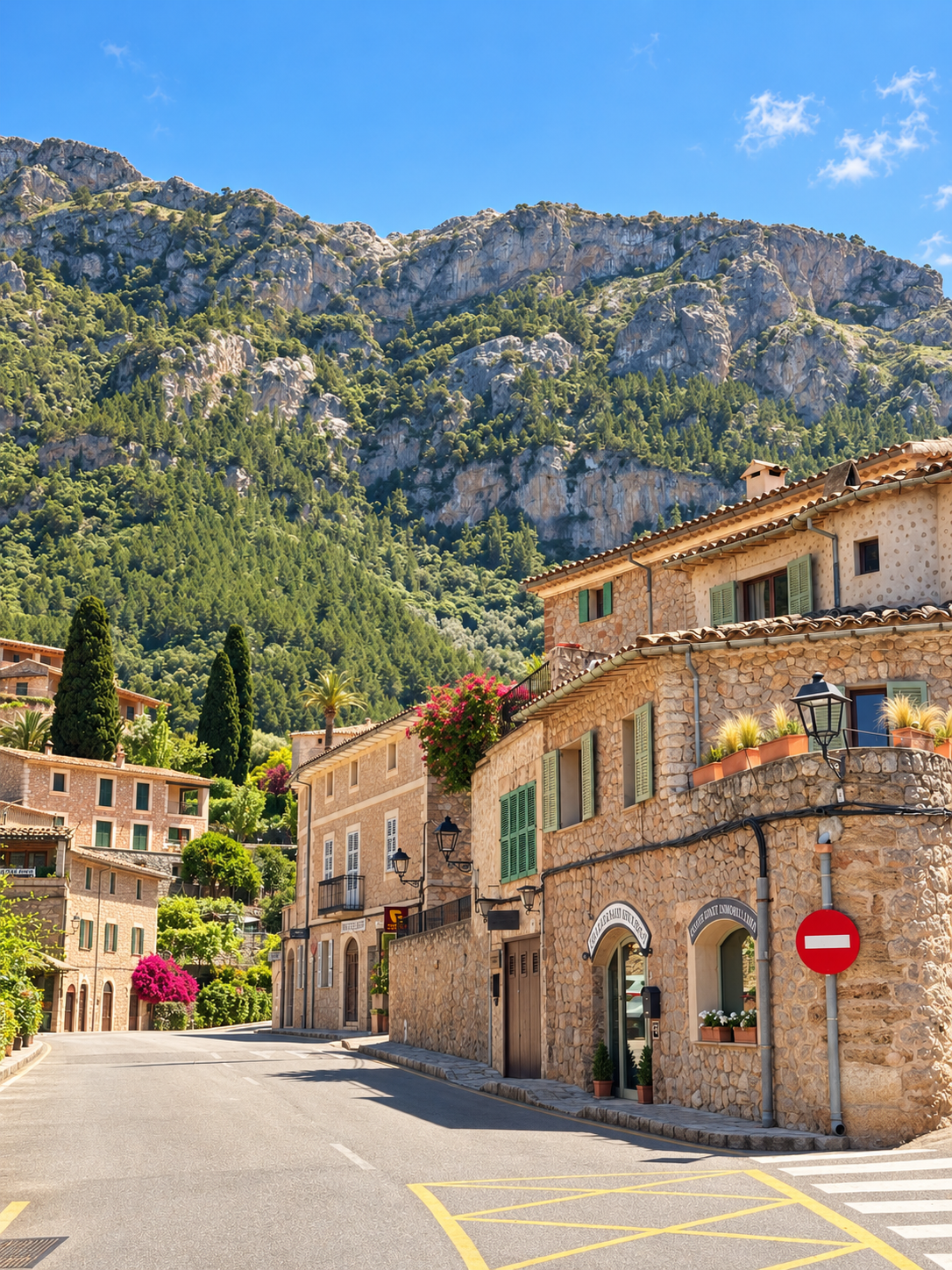
Deià is a small stone village set on the northwest slopes of the Serra de Tramuntana, with views toward the Mediterranean and a long association with writers, musicians and artists. Its beauty is real, but so are the practical constraints created by steep terrain, narrow roads, protected landscape and limited housing supply.
The area extends beyond the compact village centre. Properties may sit above or below the main road, toward Cala Deià, around Llucalcari or in rural positions between Deià and Sóller. Walking distance on a map can disguise significant gradients and difficult access.
For buyers, Deià is less about finding a standard property type than accepting scarcity and evaluating an exact setting. Privacy, sunlight, road access, parking, water, planning status and renovation feasibility can outweigh nominal floor area.
Quick decision guide
- In one sentence: A tiny Tramuntana village known for stone architecture, cultural history and dramatic terrain.
- Best suited to: Buyers prioritising beauty, privacy and a small international community.
- Less suited to: Anyone needing broad services, easy parking or simple daily logistics.
- Character: Mountain village and coastal landscape
- Year-round or seasonal: Year-round residents remain, while restaurants, visitors and traffic are much more intense in season.
- Palma: approximately 40–55 minutes in normal conditions.
- Airport: approximately 45–60 minutes; verify the live route.
- Car need: Strongly recommended; many homes and services are spread along steep roads.
- Nearest swimming: Cala Deià, reached by a narrow road and subject to seasonal pressure.
- Schools: Local provision is limited; most secondary and international-school journeys require significant travel.
- Main advantage: Landscape, architecture, cultural identity and privacy.
- Main compromise: Very limited parking, high season pressure, steep terrain and restricted everyday services.
The different parts of Deià
- Village core: walkable atmosphere but traffic and parking pressure
- Cala Deià road: coastal access with narrow roads and seasonality
- Llucalcari side: scattered coastal and rural homes
- Valldemossa side: quieter approaches with longer service journeys
02
Is this area right for you?
Deià tends to suit buyers who prioritise landscape, discretion, architecture and a small creative community. It can work as a highly personal second home or a year-round base for households comfortable with limited local services and mountain-road travel.
Village-centre homes offer character and some walkability but may lack parking or outdoor space. Rural and hillside homes can provide privacy while increasing maintenance and access complexity. Compare Sóller for a larger service centre and more housing variety, or Port de Sóller for direct beach and harbour living.
03
Property types and character
Stone village houses
Traditional houses may have terraces, layered levels and historic fabric. Inspect roofs, damp, structure, access, protected features and the approvals required for alterations.
Fincas and rural estates
Country homes are often the most aspirational properties, but they demand rigorous checks of land classification, water, access rights, boundaries, every constructed element and the scope for legal renovation.
Villas and contemporary interventions
More modern homes exist, often designed around views and terrain. Retaining walls, drainage, pool legality, road access and neighbouring sightlines remain critical.
04
Lifestyle and atmosphere
Village and cultural identity
Deià’s centre is compact, with restaurants, small shops, the church and cemetery on the hill. The village’s artistic association is reinforced by the Robert Graves House, the writer’s former home and now a museum.
Useful points of interest
- Cala Deià: a small rocky cove reached by a winding road and foot routes; parking and access are constrained.
- Robert Graves House: an important cultural site connected to the village’s literary history.
- GR 221: the Dry Stone Route crosses the wider Tramuntana landscape.
- Llucalcari: a small nearby coastal hamlet between Deià and Sóller.
Schools and families
Deià has limited local education options compared with larger towns, and older children or specific programmes may require travel. Families should verify the current education offer, catchment and transport before choosing a home. Nature and community are strong benefits, but steep roads, limited pavements and car journeys are important constraints.
A typical weekday in Deià
Daily life is small-scale and planned: local errands may be walkable, but groceries, healthcare, schools and administration often mean driving toward Sóller, Valldemossa or Palma.
Family life and schools
Local provision is limited; most secondary and international-school journeys require significant travel. Admissions, catchment, teaching language and transport arrangements should be confirmed directly with each school. Test the journey from the exact address during normal drop-off time.
Services and practical needs
Check the real walking route to groceries, pharmacy, healthcare, banks, deliveries, gyms, coworking and electric-vehicle charging. Availability can change by season and a short map distance may still involve traffic, hills or steps.
Beaches, nature and free time
The most relevant swimming options are Cala Deià, reached by a narrow road and subject to seasonal pressure. Parking, shade, accessibility and crowding should be assessed in both high season and winter. Walking, cycling, boating, golf or tennis opportunities depend on the micro-location rather than the area name alone.
Food, culture and social life
Year-round residents remain, while restaurants, visitors and traffic are much more intense in season. Buyers considering permanent residence should check which cafés, restaurants and services remain open in January, not only what is available in summer.
05
Connections
Deià lies on the mountain road between Valldemossa and Sóller and is served by TIB buses. Driving is scenic but can be slow, especially in high season or poor weather. Palma, airport, school and healthcare journeys should be tested at the times they will actually be made.
Realistic journey planning
For planning, allow around 40–55 minutes to Palma and 45–60 minutes to Palma de Mallorca Airport in ordinary conditions. These are approximate driving ranges, not guarantees: school traffic, roadworks and summer demand can add time. Check current TIB or EMT services for the exact stop and season.
06
Points to consider before buying
- Narrow roads, steep access and limited parking affect many properties.
- Planning and renovation are constrained by landscape and heritage considerations.
- Rural homes require detailed checks of water, utilities, access and legal status.
- Winter sun varies significantly with slope and orientation.
- Cala Deià is beautiful but not a broad sandy family beach.
- Local services are limited compared with Sóller or Palma.
Advantages
- Landscape, architecture, cultural identity and privacy.
- Year-round residents remain, while restaurants, visitors and traffic are much more intense in season.
Practical compromises
- Very limited parking, high season pressure, steep terrain and restricted everyday services.
- Test traffic, parking, noise, sun and the final walk at the exact address and at different times.
Who is Deià suitable for?
- Families: Possible when the school route and year-round services work from the exact home.
- Year-round residents: Year-round residents remain, while restaurants, visitors and traffic are much more intense in season.
- Remote workers: Usually possible; verify fibre and mobile coverage property by property.
- Living without a car: Less suitable for most households.
- Quiet and nature: Very suitable in carefully chosen micro-locations.
07
Frequently asked questions
Is Deià suitable for year-round living?
It can be for buyers comfortable with a small community, mountain access and travel for broader services. It is not the easiest option for every household.
Is Deià walkable?
The village core can be explored on foot, but gradients, steps and narrow roads make many homes less practically walkable.
What property types are found in Deià?
Stone village houses, fincas, villas and rural estates define the market. Supply is limited and each property is unusually site-specific.
Is Deià family-friendly?
It offers nature and community, but school travel, pavements, gradients and limited services require careful planning.
How does Deià compare with Sóller?
Deià is smaller, quieter and more constrained; Sóller offers broader services, transport and housing choice.
How does Deià compare with Port de Sóller?
Deià is a mountain village with a small cove below it. Port de Sóller is a larger harbour town with beaches and a continuous waterfront.
SOURCES & REVIEW