INDEPENDENT AREA & BUYER GUIDE
Palma is Mallorca’s capital and its deepest year-round property market. It combines the historic centre, established residential districts, waterfront addresses and suburban neighbourhoods with the island’s widest range of schools, healthcare, culture, shopping and transport.
For buyers, “Palma” is too broad to be a sufficient search. An Old Town apartment, a home in Santa Catalina, a waterfront address in Portixol and a family apartment inland involve different noise, parking, community and price dynamics.
Start with lifestyle and micro-location: daily walking radius, school route, parking, building condition, light and airport access.
Quick decision guide
- In one sentence: Mallorca’s year-round capital, offering the island’s widest choice of services, culture and neighbourhood lifestyles.
- Best suited to: People wanting urban life, walkability and strong transport connections.
- Less suited to: Buyers prioritising silence, large plots or a resort atmosphere.
- Character: City and waterfront
- Year-round or seasonal: Fully year-round, although tourist areas are busier in summer.
- Palma: approximately 0–20 minutes within the city in normal conditions.
- Airport: approximately 10–20 minutes from most central districts; verify the live route.
- Car need: Optional in central neighbourhoods; useful in outer districts and for island travel.
- Nearest swimming: Can Pere Antoni, Portixol and beaches east or west of the centre.
- Schools: The island’s broadest choice of public, concertado, private and international education.
- Main advantage: Walkability, healthcare, culture, employment and year-round services.
- Main compromise: Noise, parking, building condition and block-by-block variation.
The different parts of Palma
- Old Town: historic fabric and maximum centrality
- Santa Catalina: market, dining and dense neighbourhood life
- Portixol and Molinar: seafront routines east of the centre
- Outer residential districts: more conventional family housing and easier parking
02
Is this area right for you?
Palma suits buyers prioritising year-round services, culture, restaurants, international connections and reduced car dependence. It works for professionals, families, retirees and second-home owners who prefer a real city to a resort.
Use Palma as the overview, then compare its distinct neighbourhoods: Palma Old Town for historic walkability, Santa Catalina for market-led social life, Portixol for seafront routines, and La Lotja for a compact historic nightlife-and-waterfront micro-location.
Compare Bendinat or Son Vida if privacy, villas or golf matter more than city walkability.
03
Property types and character
Historic-centre homes
Old buildings can offer patios and roof terraces. Confirm lift access, protected elements, community approvals, structure, damp and legal alterations.
Modern apartments
Buildings with lifts and garages offer conventional layouts. Review orientation, noise, reserves and planned works.
Waterfront and suburban homes
Evaluate sea exposure, salt, parking and the actual route into the centre.
04
Lifestyle and atmosphere
City life and culture
Palma offers Mallorca’s broadest selection of markets, museums, restaurants, shops, healthcare and professional services.
Useful points of interest
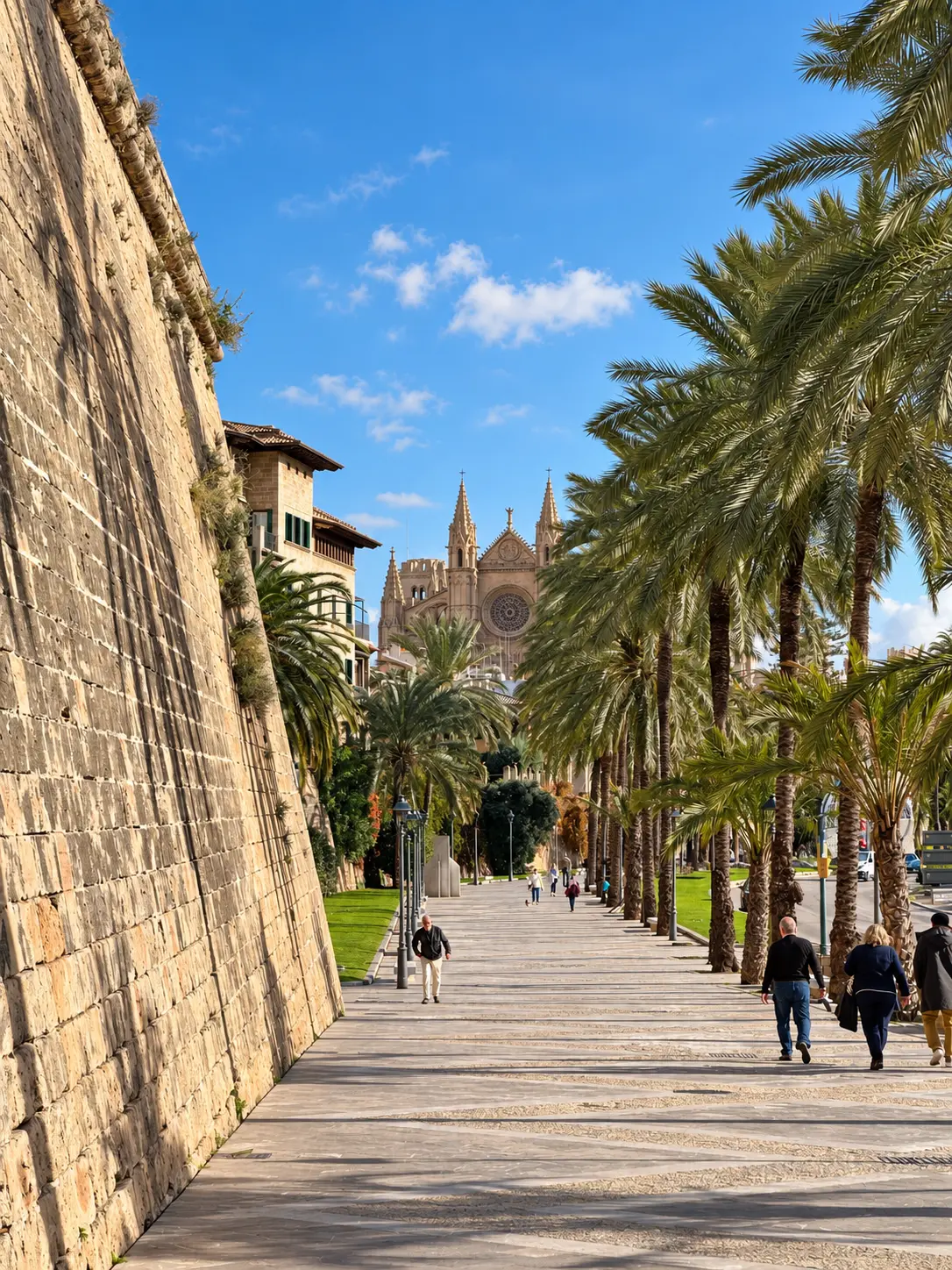
- La Seu: the cathedral and defining waterfront landmark.
- Old Town: several distinct historic residential pockets.
- Santa Catalina: market-led dining and neighbourhood life.
- Portixol and Molinar: seafront districts east of the centre.
Schools and families
Palma has public, concertado, private and international options. The closest suitable school depends on address, age, catchment, language and admissions.
A typical weekday in Palma
A weekday can be lived largely on foot in central Palma: market, school, work, healthcare and dinner may all sit within the same urban radius. Outer neighbourhoods are more car-dependent.
Family life and schools
The island’s broadest choice of public, concertado, private and international education. Admissions, catchment, teaching language and transport arrangements should be confirmed directly with each school. Test the journey from the exact address during normal drop-off time.
Services and practical needs
Check the real walking route to groceries, pharmacy, healthcare, banks, deliveries, gyms, coworking and electric-vehicle charging. Availability can change by season and a short map distance may still involve traffic, hills or steps.
Beaches, nature and free time
The most relevant swimming options are Can Pere Antoni, Portixol and beaches east or west of the centre. Parking, shade, accessibility and crowding should be assessed in both high season and winter. Walking, cycling, boating, golf or tennis opportunities depend on the micro-location rather than the area name alone.
Food, culture and social life
Fully year-round, although tourist areas are busier in summer. Buyers considering permanent residence should check which cafés, restaurants and services remain open in January, not only what is available in summer.
05
Connections
Palma is Mallorca’s transport hub, with EMT buses, regional TIB services and trains from Plaça d’Espanya. Walkability varies significantly by neighbourhood.
Realistic journey planning
For planning, allow around 0–20 minutes within the city to Palma and 10–20 minutes from most central districts to Palma de Mallorca Airport in ordinary conditions. These are approximate driving ranges, not guarantees: school traffic, roadworks and summer demand can add time. Check current TIB or EMT services for the exact stop and season.
06
Points to consider before buying
- Noise and nightlife change block by block.
- Parking and resident-access rules matter in the Old Town.
- Older buildings require scrutiny of lifts, roofs and community finances.
- Natural light varies greatly in narrow streets.
- Holiday-rental rights should never be assumed.
Advantages
- Walkability, healthcare, culture, employment and year-round services.
- Fully year-round, although tourist areas are busier in summer.
Practical compromises
- Noise, parking, building condition and block-by-block variation.
- Test traffic, parking, noise, sun and the final walk at the exact address and at different times.
Who is Palma suitable for?
- Families: Possible when the school route and year-round services work from the exact home.
- Year-round residents: Fully year-round, although tourist areas are busier in summer.
- Remote workers: Usually possible; verify fibre and mobile coverage property by property.
- Living without a car: Possible in selected central addresses, with compromises.
- Quiet and nature: Highly dependent on micro-location and season.
07
Frequently asked questions
Is Palma suitable year-round?
Yes. It has Mallorca’s strongest concentration of services, employment, schools and healthcare.
Which neighbourhood is best?
Old Town, Santa Catalina, Portixol and other districts suit different priorities.
Can you live without a car?
Often yes in central neighbourhoods.
What should apartment buyers check?
Community fees, planned works, lifts, legal alterations, noise, light and parking.
How does Palma compare with Bendinat?
Palma offers urban walkability; Bendinat prioritises quiet residential living and southwest coastal access.
SOURCES & REVIEW