INDEPENDENT AREA & BUYER GUIDE
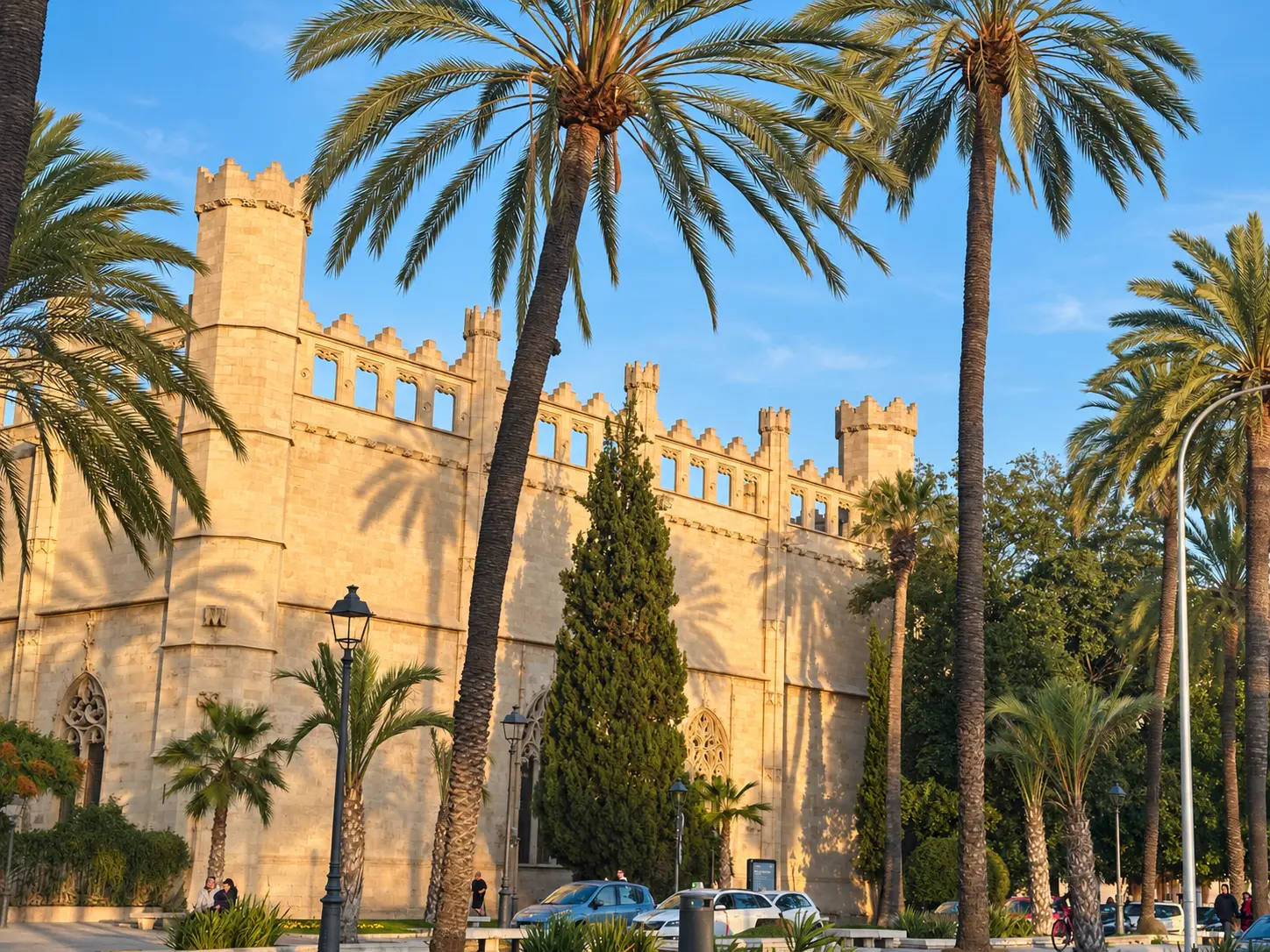
La Lotja—also written La Llotja and commonly searched as La Lonja—is one of Palma’s most atmospheric historic quarters. It sits near the waterfront around the Gothic merchants’ exchange, with medieval streets, galleries, restaurants and bars.
Historic apartments can provide exceptional architecture and walkability, while narrow streets, nightlife, deliveries, limited parking and protected buildings require address-level scrutiny.
La Lotja should be evaluated as a compact micro-location within Palma Old Town, not as a uniform market.
Quick decision guide
- In one sentence: A compact historic quarter for buyers who want architecture, restaurants and the waterfront immediately outside the door.
- Best suited to: Urban buyers prioritising atmosphere and walkability.
- Less suited to: Anyone sensitive to nightlife noise, stairs or difficult parking.
- Character: Historic city quarter
- Year-round or seasonal: Active year-round, with heavier visitor and nightlife pressure in peak periods.
- Palma: approximately Central Palma in normal conditions.
- Airport: approximately roughly 15–25 minutes; verify the live route.
- Car need: Usually unnecessary for daily life and inconvenient to park.
- Nearest swimming: Palma waterfront; city beaches are reached on foot, by bike or bus.
- Schools: Central Palma schools are accessible, but school runs by car can be awkward.
- Main advantage: Historic character, culture and exceptional walkability.
- Main compromise: Nightlife noise, protected buildings, limited parking and small lifts.
The different parts of La Lotja
- La Llotja core: medieval lanes closest to the landmark and restaurants
- Passeig del Born edge: broader streets and prime central access
- Waterfront edge: marina proximity with more traffic exposure
02
Is this area right for you?
La Lotja suits buyers who want to walk to restaurants, culture, the waterfront and central services, and who value historic character over suburban convenience. It is less suited to buyers seeking silence, easy parking or generous private outdoor space.
Place it in context through the broader Palma Old Town guide and Palma overview. Compare Santa Catalina for market-led neighbourhood life or Portixol for a seafront routine. Bendinat offers a quieter residential alternative.
03
Property types and character
Historic apartments
Verify legal distribution, structure, damp, ventilation and permissions for alterations.
Renovated residences
A polished interior does not remove building-level risk. Review roof, façade, lift, reserves and planned works.
Penthouses and terraces
Confirm whether terraces are private, communal or assigned for exclusive use and whether additions are approved.
04
Lifestyle and atmosphere
Walkable historic Palma
Restaurants, galleries, shopping, the waterfront and much of the Old Town are close. Hospitality is both a strength and a potential noise issue.
Useful points of interest
- La Llotja: Palma’s civil-Gothic former merchants’ exchange.
- Passeig del Born: central avenue for shops and city life.
- Es Baluard: modern and contemporary art museum.
- Palma waterfront: promenade and marina.
Schools and families
Central Palma provides access to a broad education network, but compact streets and limited parking can complicate school runs.
A typical weekday in La Lotja
Daily life is intensely walkable: coffee, work, galleries, groceries and dinner can be close together. Deliveries, refuse collection and late-night hospitality are the practical counterweight.
Family life and schools
Central Palma schools are accessible, but school runs by car can be awkward. Admissions, catchment, teaching language and transport arrangements should be confirmed directly with each school. Test the journey from the exact address during normal drop-off time.
Services and practical needs
Check the real walking route to groceries, pharmacy, healthcare, banks, deliveries, gyms, coworking and electric-vehicle charging. Availability can change by season and a short map distance may still involve traffic, hills or steps.
Beaches, nature and free time
The most relevant swimming options are Palma waterfront; city beaches are reached on foot, by bike or bus. Parking, shade, accessibility and crowding should be assessed in both high season and winter. Walking, cycling, boating, golf or tennis opportunities depend on the micro-location rather than the area name alone.
Food, culture and social life
Active year-round, with heavier visitor and nightlife pressure in peak periods. Buyers considering permanent residence should check which cafés, restaurants and services remain open in January, not only what is available in summer.
05
Connections
The neighbourhood is highly walkable and served by urban buses. Driving, loading and parking can be inconvenient because of narrow streets and regulated access.
Realistic journey planning
For planning, allow around Central Palma to Palma and roughly 15–25 minutes to Palma de Mallorca Airport in ordinary conditions. These are approximate driving ranges, not guarantees: school traffic, roadworks and summer demand can add time. Check current TIB or EMT services for the exact stop and season.
06
Points to consider before buying
- Nightlife noise varies by street and floor.
- Parking is limited and access may be regulated.
- Many buildings have small lifts or no lift.
- Protected status can restrict renovation.
- Check community finances and planned works.
- Searchers use La Lotja, La Llotja and La Lonja.
Advantages
- Historic character, culture and exceptional walkability.
- Active year-round, with heavier visitor and nightlife pressure in peak periods.
Practical compromises
- Nightlife noise, protected buildings, limited parking and small lifts.
- Test traffic, parking, noise, sun and the final walk at the exact address and at different times.
Who is La Lotja suitable for?
- Families: Possible when the school route and year-round services work from the exact home.
- Year-round residents: Active year-round, with heavier visitor and nightlife pressure in peak periods.
- Remote workers: Usually possible; verify fibre and mobile coverage property by property.
- Living without a car: Possible in selected central addresses, with compromises.
- Quiet and nature: Highly dependent on micro-location and season.
07
Frequently asked questions
Are La Lotja, La Llotja and La Lonja the same area?
They are commonly used for the same historic Palma quarter.
Is La Lotja quiet?
Not uniformly. Visit the exact address at several times.
Can you live without a car?
Yes, for many lifestyles.
What properties are typical?
Historic apartments, renovated residences and occasional penthouses.
What should buyers check?
Noise, lifts, protected status, legal alterations, damp, terrace rights and community finances.
SOURCES & REVIEW